Polish and Ukrainian researchers have exhumed the remains of 115 soldiers who died defending Lviv during the dual invasions by Nazi Germany and the Soviet Union in September 1939, in a move marking continued reconciliation between the two countries over wartime graves.
The excavation at Holoskivske Cemetery in Lviv, which began in August and covered 260 square metres, uncovered 133 burials in total. Alongside the Polish troops, experts identified 18 German Wehrmacht soldiers, according to Poland’s Institute for National Remembrance (IPN).
The soldiers fell during the Battle of Lwów – the Polish name for what is now the Ukrainian city of Lviv – when Polish forces attempted to hold the city against attacks from Nazi Germany, which invaded from the west on 1 September, and the Soviet Union, which entered from the east on 17 September. Polish defenders surrendered on 22 September, and the city came under Soviet control following the secret Molotov-Ribbentrop Pact that divided Poland between the two powers.
Identification efforts under way
Researchers are now working to identify the recovered remains. Bone samples have been taken for DNA testing, which will be compared with samples from potential relatives. Experts also recovered approximately 2,900 items from the site, including identification tags, bayonets, helmets and religious objects, which will assist in the identification process.
“For us, the identification of the remains is the most important stage of the work, because it is important to return these people their names,” said Dominika Siemińska, a researcher from the IPN, in a statement released by Lviv city council. She added that the team currently has a list of 76 potential names, though warned that “because so many years have passed, it will be difficult to find their relatives”.
Siemińska praised the Ukrainian authorities “for providing us with protection, support and the opportunity to work peacefully”, adding that “cooperation with the Ukrainian side is going very well”.
Warming relations after years of dispute
The exhumation represents a significant step in improving Polish-Ukrainian relations over the sensitive issue of wartime graves. From 2017 to 2024, Ukraine imposed a ban on searches for Polish victims of the Second World War. The prohibition came in response to Poland’s dismantling of a monument to the Ukrainian Insurgent Army (UPA), a nationalist partisan group that fought Soviet forces but also led massacres of ethnic Poles during the war.
Last year marked a diplomatic breakthrough when Ukraine permitted exhumations to resume. A previous excavation in Lviv uncovered the remains of 31 Polish soldiers, with possible remains of dozens more that proved difficult to identify due to reburial and the nature of their deaths in artillery fire. Those remains were reburied in the Ukrainian city of Mostyska at a ceremony attended by senior officials from both nations.
The Polish soldiers’ remains from the latest exhumation will also be buried at the Polish cemetery in Mostyska, though no date has yet been announced. The German remains are being transferred to Volksbund, an organisation specialising in locating and reburying German soldiers.
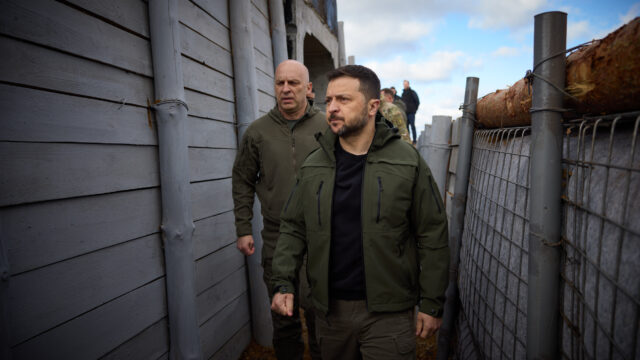
However, reconciliation efforts have faced setbacks this year. Ukrainian President Volodymyr Zelensky’s decision to name a military unit after the “heroes of the UPA” provoked anger in Poland, leading President Karol Nawrocki to strip Zelensky of Poland’s highest state honour.
What this means for Poles in the UK
For Poles in Britain with family histories connected to the Second World War, particularly those whose relatives fought in the defence of eastern Poland or went missing in 1939, the exhumation offers a chance for closure. Anyone who believes a relative may have died in the Battle of Lwów in September 1939 can contact the Institute for National Remembrance (IPN) to inquire about DNA comparison. The IPN has stated that 76 potential names are currently being investigated, and relatives may be able to provide DNA samples to assist identification efforts.
The work also highlights the ongoing importance of Polish-Ukrainian cooperation in addressing historical wounds. Many Poles in the UK maintain strong ties to family history in what is now western Ukraine, and the resumption of exhumations after a seven-year ban represents progress in a relationship vital to both countries, particularly in the context of Russia’s ongoing war against Ukraine.